Homeowners’ Heat Pump Buying Guide
A heat pump heats and cools your home with one electric system, even throughout a Minnesota winter.
Are you a homeowner ready to make the switch?
Heat pumps work by transferring heat between indoor and outdoor environments to either cool or warm space. Even in cold climates, they can extract heat from the outdoor air and efficiently distribute it indoors for heating purposes. This process allows heat pumps to provide effective heating during winter while offering cooling improvements in warmer seasons.
Begin Your Heat Pump Journey with Confidence
Whether you're exploring efficient heating and cooling, replacing a broken system, or planning a home upgrade, this guide will help.
Heat pumps provide both heating and cooling in one reliable system, keeping your home comfortable year-round while using significantly less energy than traditional systems. By moving heat instead of generating it, heat pumps can deliver more energy than they consume, making them one of the most efficient technologies available. With more rebates, tax credits, incentives, availability of low-cost electric rates, and low-cost financing options than ever before, heat pumps offer an affordable way to avoid costly repairs, future-proof your home, and make a smart investment in long-term comfort—no matter when you make the switch.
Getting Started — What are Heat Pumps?
A heat pump heats and cools your home with a single, highly efficient system. Instead of burning fuel or generating heat, it simply moves heat from one place to another, using far less energy than a traditional furnace or air conditioner.
Additionally, heat pumps perform best in homes that are properly sealed against the elements, a process known as weatherization.
Estimate Your Costs — Use the Heating & Cooling Savings Estimator
Compare your current heating costs with what you might pay using an air source heat pump. It’s a quick way to estimate costs using your utility information, based on real Minnesota data, and check to see if heating with a heat pump could save you money!
This tool helps answer questions like:
- Will switching save me money?
- How do different systems affect my energy usage?
- What effect will different electric rates have on my bill?
Explore Rebates and Incentives
Don’t miss out on the options that can make your upgrade more affordable.
Learn about:
- Incentives by utility
- Low-interest financing programs
- State and local rebates
Choose a Verified Contractor
Choosing the right contractor is essential to getting the full benefits of a heat pump. The MN ASHP Collaborative has a Preferred Contractor Network (PCN) of experienced, vetted contractors who know how to install and service heat pumps in Minnesota homes.
With the Preferred Contractor Network:
- Know what to ask during contractor bids
- Understand what a quality installation looks like
- Avoid common mistakes
What is a dual fuel heating system?
A dual fuel system pairs an air source heat pump with a furnace. The heat pump handles your everyday heating and cooling, and your furnace automatically takes over on the coldest days. Learn how it works, why it's a practical fit for Minnesota homes, and what to ask your contractor.
Homeowner FAQ
Modern, variable-speed heat pumps provide comfortable heating. The delivered air from a heat pump does feel different than from a furnace. A properly sized, variable-speed heat pump delivers less hot air for longer periods of time than a furnace. Through this operation, variable-speed heat pumps save energy and maintain a comfortable, consistent indoor temperature.
Yes, you can set your thermostat back for periods of time with a heat pump (called “setbacks” in this section). However, if you want to maximize the energy savings from your heat pump, we recommend minor setbacks only.
With a traditional heating system, setting the thermostat back at night or while people are out for the day can help save energy. It seems counterintuitive, but the most energy efficient way to use a heat pump is default to set a consistent thermostat point. Heat pumps operate best when maintaining the same temperature for long periods of time.
That said, you can still choose to make setbacks if you would like. Setbacks within a few degrees have negligible effects on the heat pump's efficiency. This can be an option if you like your house cooler at night and still want to maintain good energy efficiency.
The exception is if you are away from home for a few days or more. A larger setback will still save energy with a heat pump in these cases.
A properly maintained heat pump will operate more efficiently and last longer. The best way to maintain your heat pump is to make sure the outdoor unit has good airflow. Other repairs and maintenance should be left to a contractor. Maintenance steps you can take include:
- Regularly clean or change the filter for the system.
- Clean debris off the outdoor coils.
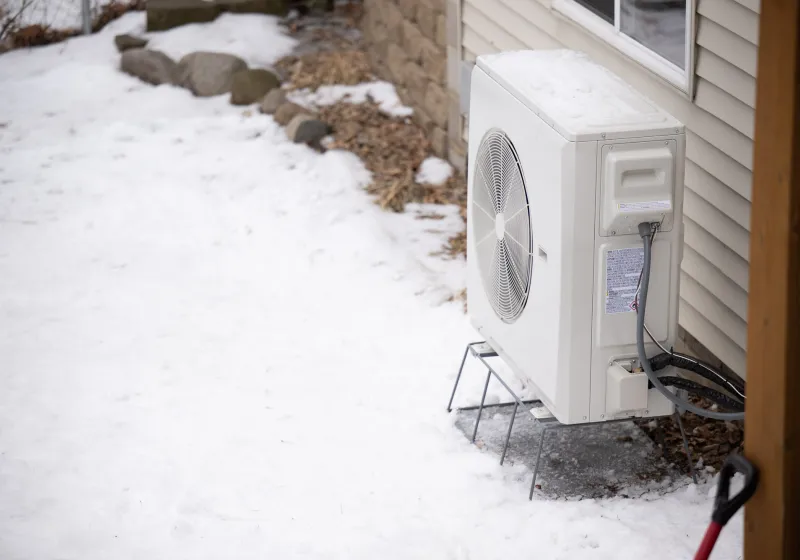
- Keep the outdoor unit clear of snow accumulation.
- Keep plants and other blockages away from the outdoor unit.
The filter location depends on whether you have a ducted or ductless mini-split system. If you have a ducted system, the heat pump uses the same filter that the furnace does. If you have a ductless system, each head has its own filter that can be cleaned.
Airborne seeds and other debris can accumulate on the outdoor coils, preventing proper airflow. You can use a common hose (not a pressure washer!) to spray the debris off the coils.
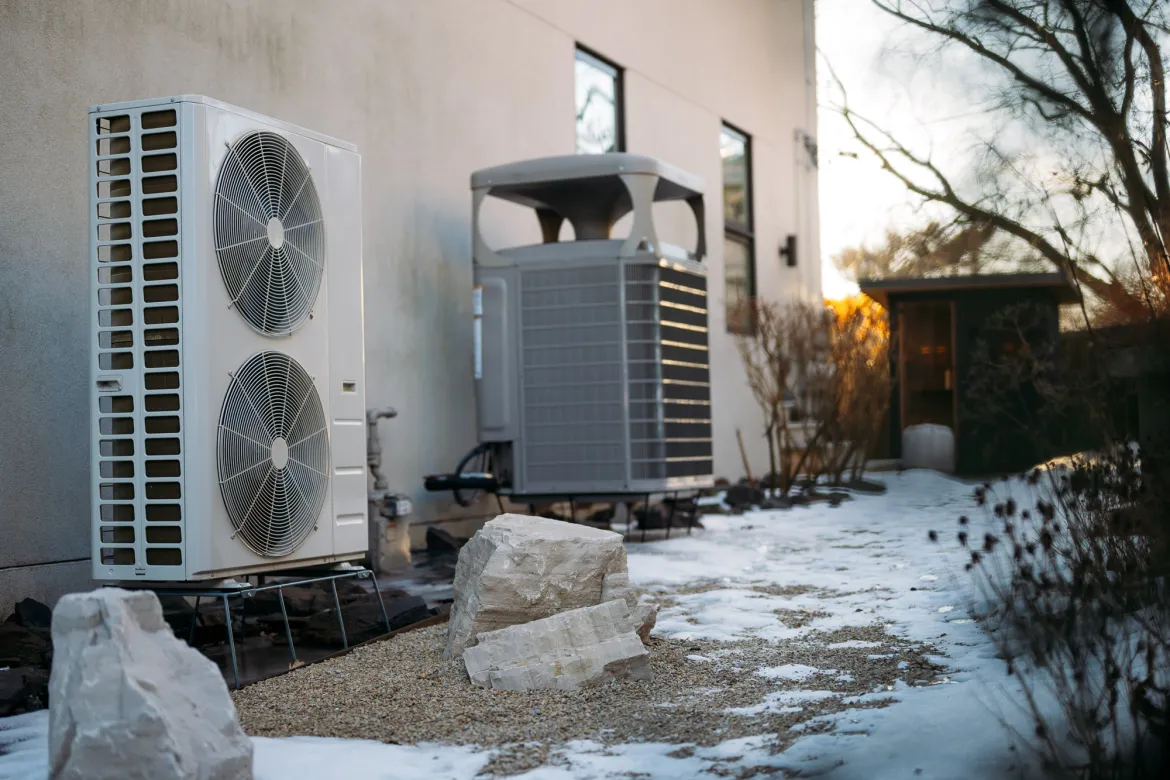
The outdoor unit should have some separation from obstructions that limit its airflow. Plants and shrubbery should be trimmed back a couple feet from the heat pump. Take care not to install decking, masonry, fences, or other solid objects within five feet of where the outdoor unit discharges air. For a ducted unit, air is usually discharged up. For a ductless system, air is discharged sideways.
Finally, keep snow from piling up on the outdoor unit. Snow blocks airflow and can also encourage ice buildup on the coils.
A contractor will propose locations for the ductless mini-split indoor units to meet your heating and cooling needs. Ductless indoor units can vary in style and can be installed on the wall, floor, or ceiling.
Defrost cycles are a normal part of heat pump operation but can surprise people who are new to owning one.
Heat pumps enter defrost mode when there is a risk of frost buildup on the outdoor unit’s coils. Too much frost buildup can damage a heat pump by restricting airflow to the outdoor unit. Frost buildup is more likely during wintery precipitation and when the outdoor temperature is between 25°F and 45°F. Defrost cycles typically last 10 minutes and occur at most in 30-minute intervals.
There are a few new sights and sounds to expect during a typical defrost cycle. The outdoor unit will emit a metallic drone that is louder than typical operation. As the defrost cycles melts the frost, you may see water drip, icicles form, or steam rise from the outdoor unit. The sounds may peak as the defrost cycle completes and the heat pump resumes normal operation. Take care when walking around heat pumps in the winter, as there may be frozen meltwater from defrost cycles underfoot.
You can help reduce the need for defrost cycles by maintaining good airflow to the outdoor unit. Keep snow from piling up where it would block airflow.
If your heat pump seems to be in defrost too frequently or the behavior is atypical, contact your contractor for assistance.
Ready to talk to a heat pump pro?